

Following the tragedy at Newtown Sandy Hook Elementary school in Newtown, Conn., the NRA called for an armed response; to reverse course in making schools "gun free zones," or advertised unarmed targets.
NRA executive vice president, Wayne LaPierre, said, "the monsters and the predators of the world" have exploited the fact that most schools are gun-free zones, noting that other important institutions — such as banks, courts, and power plants — are protected with armed security. This suggestion was met with significant criticism in the media and from politicians. Yet in practice before Newtown, and even more since then, this idea has widespread acceptance.
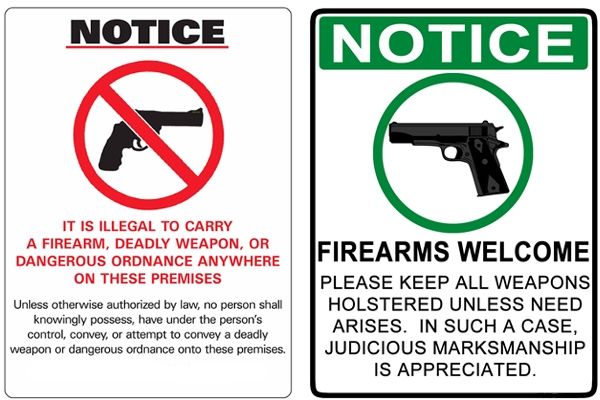
Some school districts already allow armed staff. Harrold Independent School District in Texas allows employees to carry concealed guns on school campuses. Employees must have a Texas state concealed carry license, and have completed firearms training, and have received approval from the school board.
A 2010 report from the Department of Justice, "Assigning Police Officers to Schools," states that an estimated one-third of all sheriffs’ offices and almost half of all municipal police departments assign nearly 17,000 sworn officers to serve in schools. Nearly half of all public schools have assigned police officers, referred to as school resource officers (SROs). The COPS in Schools program has drawn on research findings and police practices in the United States, the United Kingdom, Canada, Australia, New Zealand, the Netherlands, and Scandinavia, noting that even though laws, customs, and police practices vary from country to country, "it is apparent that the police everywhere experience common problems." Officers often support advance planning for managing crises, including assisting with: developing incident response systems, developing and coordinating emergency response plans (in conjunction with other emergency responders), and rehearsing such protocols using tabletop exercises, drills, and mock evacuations and lock downs.
The COPS in Schools program isn't new: former President Clinton provided funding for it in 2000 following the tragedy at Columbine, adding to the 2,200 officers in the program at that time. Nor is Clinton the only Democratic president to formally support armed security in schools. As I have written previously, President Obama signed 23 executive orders following the tragedy at Newtown; Order 18 is "Provide incentives for schools to hire school resource officers." TIME magazine confirms that the president is "increase[ing] federal funding for school security." (January 28, 2013, p.30). While perhaps not an end-all solution, armed guards have stopped shootings. The Associated Press reported that an armed school resource officer disarmed a teen with a gun during a shooting at a middle school in Atlanta this January.
Since the tragedy at Newtown, some schools are opting for increased armed security. Fontana Unified School District Police Department purchased 14 AR-15 rifles "to protect students in response to recent shootings," with support from Superintendent Cali Olsen-Binks, Fontana Police Chief Rodney Jones, and Fontana Mayor Acquanetta Warren. The AR-15 rifles will be stored on campuses in locked safes for responding police officers in the event of an attack.
Educators are also opting for training in armed response and active shooter response. After Newtown, non-profit Buckeye Firearms Foundation announced that they would provide free firearms training to teachers and school administrative staff. At least 600 applicants from Arizona, California, Florida, Illinois, Indiana, Kentucky, Michigan, Nevada, New Jersey, Pennsylvania, Tennessee, Texas, Washington, and West Virginia have taken them up on the offer. The foundation stated that, "More than a third of applicants are women. Over 70% percent are teachers, but there are also administrators, office staff, and guidance counselors. Half work in high schools, but many work in kindergartens, grade schools, and middle schools. And there's a fairly even distribution of applicants from urban, suburban, and rural areas." Applicants will have to pass the same test as law enforcement to graduate the program, which also provides advanced level active shooter response training.
Even Newtown's school board has voted for armed security, voting unanimously to request an armed guard for each of the district’s four elementary schools. In Newtown, the argument isn't over whether it's a good idea to have armed guards, but rather if schools should have more than one armed guard. Board member Richard Gaines asked "Is that enough?"
Despite the lashing the NRA has received in the press for the idea of increasing armed security at schools, it has been and is increasingly the position adopted by our presidents, the Justice Department, police and sheriffs departments, many school districts, and the very educators and administrators who work with our children on a daily basis. Armed security may not be the final solution, but in the gun control debate, where many call for "doing something," this would seem to be a start. It's hard to argue the point when even Newtown is adopting the practice.


Follow Me on Twitter: https://twitter.com/2AFight
Follow Me on Facebook: https://www.facebook.com/2ndAmendmentFight
This article also appears on PolicyMic. (Original publication February 5, 2013).
NRA executive vice president, Wayne LaPierre, said, "the monsters and the predators of the world" have exploited the fact that most schools are gun-free zones, noting that other important institutions — such as banks, courts, and power plants — are protected with armed security. This suggestion was met with significant criticism in the media and from politicians. Yet in practice before Newtown, and even more since then, this idea has widespread acceptance.
Some school districts already allow armed staff. Harrold Independent School District in Texas allows employees to carry concealed guns on school campuses. Employees must have a Texas state concealed carry license, and have completed firearms training, and have received approval from the school board.
A 2010 report from the Department of Justice, "Assigning Police Officers to Schools," states that an estimated one-third of all sheriffs’ offices and almost half of all municipal police departments assign nearly 17,000 sworn officers to serve in schools. Nearly half of all public schools have assigned police officers, referred to as school resource officers (SROs). The COPS in Schools program has drawn on research findings and police practices in the United States, the United Kingdom, Canada, Australia, New Zealand, the Netherlands, and Scandinavia, noting that even though laws, customs, and police practices vary from country to country, "it is apparent that the police everywhere experience common problems." Officers often support advance planning for managing crises, including assisting with: developing incident response systems, developing and coordinating emergency response plans (in conjunction with other emergency responders), and rehearsing such protocols using tabletop exercises, drills, and mock evacuations and lock downs.
The COPS in Schools program isn't new: former President Clinton provided funding for it in 2000 following the tragedy at Columbine, adding to the 2,200 officers in the program at that time. Nor is Clinton the only Democratic president to formally support armed security in schools. As I have written previously, President Obama signed 23 executive orders following the tragedy at Newtown; Order 18 is "Provide incentives for schools to hire school resource officers." TIME magazine confirms that the president is "increase[ing] federal funding for school security." (January 28, 2013, p.30). While perhaps not an end-all solution, armed guards have stopped shootings. The Associated Press reported that an armed school resource officer disarmed a teen with a gun during a shooting at a middle school in Atlanta this January.
Since the tragedy at Newtown, some schools are opting for increased armed security. Fontana Unified School District Police Department purchased 14 AR-15 rifles "to protect students in response to recent shootings," with support from Superintendent Cali Olsen-Binks, Fontana Police Chief Rodney Jones, and Fontana Mayor Acquanetta Warren. The AR-15 rifles will be stored on campuses in locked safes for responding police officers in the event of an attack.
Educators are also opting for training in armed response and active shooter response. After Newtown, non-profit Buckeye Firearms Foundation announced that they would provide free firearms training to teachers and school administrative staff. At least 600 applicants from Arizona, California, Florida, Illinois, Indiana, Kentucky, Michigan, Nevada, New Jersey, Pennsylvania, Tennessee, Texas, Washington, and West Virginia have taken them up on the offer. The foundation stated that, "More than a third of applicants are women. Over 70% percent are teachers, but there are also administrators, office staff, and guidance counselors. Half work in high schools, but many work in kindergartens, grade schools, and middle schools. And there's a fairly even distribution of applicants from urban, suburban, and rural areas." Applicants will have to pass the same test as law enforcement to graduate the program, which also provides advanced level active shooter response training.
Even Newtown's school board has voted for armed security, voting unanimously to request an armed guard for each of the district’s four elementary schools. In Newtown, the argument isn't over whether it's a good idea to have armed guards, but rather if schools should have more than one armed guard. Board member Richard Gaines asked "Is that enough?"
Despite the lashing the NRA has received in the press for the idea of increasing armed security at schools, it has been and is increasingly the position adopted by our presidents, the Justice Department, police and sheriffs departments, many school districts, and the very educators and administrators who work with our children on a daily basis. Armed security may not be the final solution, but in the gun control debate, where many call for "doing something," this would seem to be a start. It's hard to argue the point when even Newtown is adopting the practice.
By Matt MacBradaigh. Matt
is a Christian, Husband, Father, Patriot, and Conservative from the
Pacific Northwest. Matt writes about the Second Amendment, Gun Control,
Gun Rights, and Gun Policy issues and is published on The Bell Towers, The Brenner Brief, PolicyMic. TavernKeepers, and Vocativ.
Follow Me on Twitter: https://twitter.com/2AFight
Follow Me on Facebook: https://www.facebook.com/2ndAmendmentFight


