Showing posts with label D.c. vs Heller. Show all posts

Tuesday, August 6, 2013

9 Useless and Unconstitutional Anti-Gun Laws California Will Pass in 2013

9, useless, and, unconstitutional, anti gun, laws, california, will, pass, in, 2013,
9 Useless and Unconstitutional Anti-Gun Laws California Will Pass in 2013 

Crazy in California? You bet. New York State recently passed tough, new gun laws, though they already had some of the strictest gun laws in the nation. Not to be outdone, California — which also has strict gun laws — is proposing even tougher new gun laws than New York passed. Undoubtedly, this will please some gun control advocates, and raise the ire of gun-rights advocates.

If these laws are passed, and subsequently challenged in court, many would not likely be upheld as constitutional. Even more disheartening is that none of the proposed laws seek to address any underlying causes of gun violence. California’s new gun laws, if passed, will include:


1. Ban all Semi-Automatic Rifles That Accept Detachable Magazines:


California's current assault weapons ban restricts so-called "assault rifles," based on cosmetic features. The new laws would ban all semi-automatic rifles regardless of features.


2. Ban Possession of High-Capacity Magazines:


California law bans the transfer, but not possession, of magazines that can hold over ten bullets. It is currently legal to buy the constituent parts and assemble magazines themselves. The new law would make this illegal.


3. Require Yearly Safety Certificate:


This provision would require all handgun owners obtain a safety certificate every year, rather than the every-five-years requirement for purchases of new handguns. Some states require a safety course if handgun owners apply for a license to carry the handgun concealed (CCW). California's law would require all handgun owners, regardless of CCW, meaning it would apply even if they only possess their handgun in their residence for home defense.


4. Universal Registration of All Guns:


The law would create "ownership records consistently across-the-board, ensuring all firearms are recorded" so that the background check system can prevent criminals from getting guns. Gun registration has been used later for the purpose of confiscation, even in the United States.


5. Require Background Checks on All Ammunition Purchases:
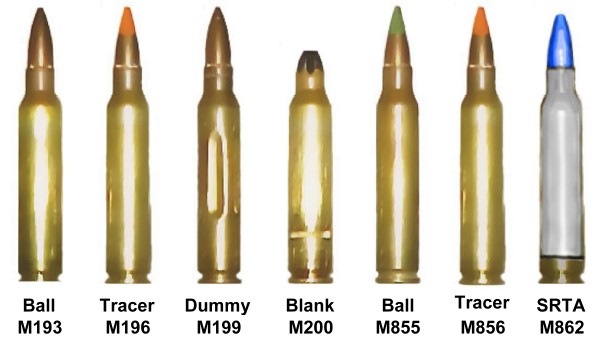

This provision would require anyone wishing to buy ammunition to first get a permit by passing a "full and complete" background check, as Los Angeles and Sacramento already do.


6. Regulating Gun Loans:


This would prevent unregulated gun loans, with some exceptions (like hunting), in order to keep weapons from those who haven't passed background checks.


7. Prevent Prohibited Individuals From Living in Homes With Guns:


California's Armed Persons Prohibition (APP) database lists people who can't legally own weapons, such as felons and those adjudicated mentally ill under state law. This addition would prevent people on the list from living in a house (even family member's homes) that has a gun.


8. Crack Down on People Who Can't Own Guns Legally but do Anyway:


Currently, 19,700 people who are on the APP list own guns. Police estimate that these people own roughly 39,000 firearms. This new law would authorize additional funding to enforce the law in this area.


9. Ban Shotgun-Rifle Combinations:


It would ban this class of class of weapon, which are usually single-shot rifles, which are not at all like semi-automatic rifles or so-called "assault rifles."
Update: Since original publication, several Californian residents responded that the bill doesn't actually  ban Rifle-Shotgun combinations. The original news stories reported that this was the case. The final bill may not have reflected this. Even if there is no inane shotgun provision, there is still plenty to find fault with in California's new anti-gun laws (the other 8 points).


California's new laws, if passed, would likely face legal challenge by groups such as Responsible Citizens of California. If challenged in court, many of these provisions would likely not remain upheld based on the Court's previous rulings that weapons "in common use at the time" (p.55) are constitutionally protected arms. The ammunition provision is particularly interesting; the Court has ruled the regulations that render firearm useless for self-defense are not constitutional. This ruling was aimed at trigger locks, not ammunition specifically, but the principal may apply since a gun without ammunition is useless for self-defense, the Second Amendment's "core lawful purpose of self-defense" (p.58). The court adds: "A statute which, under the pretence of regulating, amounts to a destruction of the right, or which requires arms to be so borne as to render them wholly useless for the purpose of defense, would be clearly unconstitutional" (p.57). The Court also ruled that the Second Amendment has "no interest-balancing" provision. This means that the state would not be justified in restricting purchase of ammunition (necessary to use a gun for self-defense) by reason of balancing the state's interest in public safety.

In addition to the potential legal challenge, what is disappointing about California's decision to pursue even stricter gun laws than they currently have is that none of these proposals address any of the underlying causes of violence. Gang violence is among the major underlying causes — accounting for "an average of 48% of violent crime in most jurisdictions, up to 90% in some jurisdictions." It's a safe bet some of the high rate jurisdictions are in California. Drug abuse is also a major predictor of violence. These two factors are related via the drug trade, which is heavily stepped in California through the border. Instead of addressing the root causes, California is opting for 'more of the same' laws they already have, while further eroding honest citizen's rights and ability for personal self-defense.




By Matt MacBradaigh. Matt is a Christian, Husband, Father, Patriot, and Conservative from the Pacific Northwest. Matt writes about the Second Amendment, Gun Control, Gun Rights, and Gun Policy issues and is published on The Bell TowersThe Brenner Brief, PolicyMic. TavernKeepers, and Vocativ.
https://twitter.com/2AFighthttp://www.facebook.com/2ndAmendmentFight


Follow Me on Twitter: https://twitter.com/2AFight  

Follow Me on Facebook:   https://www.facebook.com/2ndAmendmentFight


This article also appears on PolicyMic. (Original publication February 13, 2013).


9 Things You Didn't Know About the Second Amendment

1. The Second Amendment codifies a pre-existing right

The Constitution doesn't grant or create rights; it recognizes and protects rights that inherently exist. This is why the Founders used the word "unalienable" previously in the Declaration of Independence; these rights cannot be created or taken away. In D.C. vs. Heller, the Supreme Court said the Second Amendment “codified a pre-existing right. The very text of the Second Amendment implicitly recognizes the pre-existence of the right and declares only that it “shall not be infringed ... this is not a right granted by the Constitution” (p. 19).


2. The Second Amendment protects individual, not collective rights


The use of the word "militia" has created some confusion in modern times, because we don't understand the language as it was used at the time the Constitution was written. However, the Supreme Court states in context, "it was clearly an individual right" (p. 20). The operative clause of the Second Amendment is “the right of the people to keep and bear arms shall not be infringed,” which is used three times in the Bill of Rights. The Court explains that "All three of these instances unambiguously refer to individual rights, not 'collective' rights, or rights that may be exercised only through participation in some corporate body" (p. 5), adding “nowhere else in the Constitution does a 'right' attributed to “the people” refer to anything other than an individual right" (p. 6).


3. Every citizen is the militia

To further clarify regarding the use of the word "militia," the court states “the ordinary definition of the militia as all able-bodied men” (p. 23). Today we would say it is all citizens, not necessarily just men. The Court explains: “'Keep arms' was simply a common way of referring to possessing arms, for militiamen and everyone else" (p. 9). Since the militia is all of us, it doesn't mean “only carrying a weapon in an organized military unit" (p. 11-12). “It was clearly an individual right, having nothing whatever to do with service in a militia" (p. 20).


4. Personal self-defense is the primary purpose of the Second Amendment

We often hear politicians talk about their strong commitment to the Second Amendment while simultaneously mentioning hunting. Although hunting is a legitimate purpose for firearms, it isn't the primary purpose for the Second Amendment. The Court states “the core lawful purpose [is] self-defense” (p. 58), explaining the Founders “understood the right to enable individuals to defend themselves ... the 'right of self-preservation' as permitting a citizen to 'repe[l] force by force' when 'the intervention of society in his behalf, may be too late to prevent an injury' (p.21). They conclude "the inherent right of self-defense has been central to the Second Amendment right" (p.56).


5. There is no interest-balancing approach to the Second Amendment

 
Interest-balancing means we balance a right with other interests. The court notes that we don't interpret rights this way stating “we know of no other enumerated constitutional right whose core protection has been subjected to a freestanding “interest-balancing” approach. The very enumeration of the right takes out of the hands of government the power to decide on a case-by-case basis whether the right is really worth insisting upon. A constitutional guarantee subject to future judges’ assessments of its usefulness is no constitutional guarantee at all” (p.62-63). This doesn't mean that it is unlimited, the same as all rights (more on that below). However, the court states that even though gun violence is a problem to be taken seriously, “the enshrinement of constitutional rights necessarily takes certain policy choices off the table" (p.64).


6. The Second Amendment exists to prevent tyranny

 
You've probably heard this. It's listed because this is one of those things about the Second Amendment that many people think is made up. In truth, this is not made up. The Court explains that in order to keep the nation free (“security of a free state”), then the people need arms: “When the able-bodied men of a nation are trained in arms and organized, they are better able to resist tyranny" (p.24-25). The Court states that the Founders noted "that history showed that the way tyrants had eliminated a militia consisting of all the able bodied men was not by banning the militia but simply by taking away the people’s arms, enabling a select militia or standing army to suppress political opponents" (p. 25). At the time of ratification, there was real fear that government could become oppressive: “during the 1788 ratification debates, the fear that the federal government would disarm the people in order to impose rule through a standing army or select militia was pervasive" (p.25). The response to that concern was to codify the citizens' militia right to arms in the Constitution (p. 26).


7. The Second Amendment was also meant as a provision to repel a foreign army invasion

You may find this one comical, but it's in there. The court notes one of many reasons for the militia to ensure a free state was “it is useful in repelling invasions” (p.24). This provision, like tyranny, isn't an everyday occurring use of the right; more like a once-in-a-century (if that) kind of provision. A popular myth from World War II holds Isoroku Yamamoto, commander-in-chief of the Imperial Japanese navy allegedly said “You cannot invade the mainland United States. There would be a rifle behind every blade of grass.” Although there is no evidence of him saying this, there was concern that Japan might invade during WWII. Japan did invade Alaska, which was a U.S. territory at the time, and even today on the West Coast there are still gun embankments from the era (now mostly parks). The fact is that there are over 310 million firearms in the United States as of 2009, making a foreign invasion success less likely (that, and the U.S. military is arguably the strongest in the world).


8. The Second Amendment protects weapons "in common use at the time"

The right to keep and bear arms isn't unlimited: “Like most rights, the right secured by the Second Amendment is not unlimited” (p. 54). The Court upheld restrictions like the prohibition of arms by felons and the mentally ill, and carrying in certain prohibited places like schools and courthouses. What is protected are weapons "in common use of the time" (p.55). This doesn't mean weapons in common use “at that time,” meaning the 18th Century. The Court said the idea that it would is “frivolous” and that “the Second Amendment extends, prima facie, to all instruments that constitute bearable arms, even those that were not in existence at the time of the founding" (p.8). The Court's criteria includes weapons in popular widespread use “that [are] overwhelmingly chosen by American society" (p. 56), and “the most popular weapon chosen by Americans” (p. 58).


9. The Second Amendment might require full-blown military arms to fulfill the original intent
 
The Court didn't rule specifically on this in D.C. vs. Heller, but noting that weapon technology has drastically changed (mentioning modern day bombers and tanks), they stated “the conception of the militia at the time of the Second Amendment’s ratification was the body of all citizens capable of military service, who would bring the sorts of lawful weapons that they possessed at home to militia duty. It may well be true today that a militia, to be as effective as militias in the 18th century, would require sophisticated arms that are highly unusual in society at large" (p. 55).

They further added that “the fact that modern developments [in modern weaponry] have limited the degree of fit between the prefatory clause and the protected right cannot change our interpretation of the right" (p. 56). A full ruling has not been made, as this was not in the scope the court was asked to rule on in the D.C. vs. Heller case, but they left the door open for future ruling.


By Matt MacBradaigh. Matt is a Christian, Husband, Father, Patriot, and Conservative from the Pacific Northwest. Matt writes about the Second Amendment, Gun Control, Gun Rights, and Gun Policy issues and is published on The Bell TowersThe Brenner Brief, PolicyMic. TavernKeepers, and Vocativ.
https://twitter.com/2AFighthttp://www.facebook.com/2ndAmendmentFight


Follow Me on Twitter: https://twitter.com/2AFight  

Follow Me on Facebook:   https://www.facebook.com/2ndAmendmentFight


This article also appears on PolicyMic. (Original publication February 8, 2013).


9 Things You Didn’t Know About the Second Amendment

9 Things You Didn’t Know About the Second Amendment
1. The Second Amendment codifies a pre-existing right
The Constitution doesn’t grant or create rights; it recognizes and protects rights that inherently exist. This is why the Founders used the word “unalienable” previously in the Declaration of Independence; these rights cannot be created or taken away. In D.C. v. Heller, the Supreme Court said the Second Amendment “codified a pre-existing right. The very text of the Second Amendment implicitly recognizes the pre-existence of the right and declares only that it “shall not be infringed … this is not a right granted by the Constitution” (p. 19).
2. The Second Amendment protects individual, not collective rights
The use of the word “militia” has created some confusion in modern times, because we don’t understand the language as it was used at the time the Constitution was written. However, the Supreme Court states in context, “it was clearly an individual right” (p. 20). The operative clause of the Second Amendment is “the right of the people to keep and bear arms shall not be infringed,” which is used three times in the Bill of Rights. The Court explains that “All three of these instances unambiguously refer to individual rights, not ‘collective’ rights, or rights that may be exercised only through participation in some corporate body” (p. 5), adding “nowhere else in the Constitution does a ‘right’ attributed to “the people” refer to anything other than an individual right” (p. 6).
3. Every citizen is the militia
To further clarify regarding the use of the word “militia,” the court states “the ordinary definition of the militia as all able-bodied men” (p. 23). Today we would say it is all citizens, not necessarily just men. The Court explains: “’Keep arms’ was simply a common way of referring to possessing arms, for militiamen and everyone else” (p. 9). Since the militia is all of us, it doesn’t mean “only carrying a weapon in an organized military unit” (p. 11-12). “It was clearly an individual right, having nothing whatever to do with service in a militia” (p. 20).
4. Personal self-defense is the primary purpose of the Second Amendment
We often hear politicians talk about their strong commitment to the Second Amendment while simultaneously mentioning hunting. Although hunting is a legitimate purpose for firearms, it isn’t the primary purpose for the Second Amendment. The Court states “the core lawful purpose [is] self-defense” (p. 58), explaining the Founders “understood the right to enable individuals to defend themselves … the ‘right of self-preservation’ as permitting a citizen to ‘repe[l] force by force’ when ‘the intervention of society in his behalf, may be too late to prevent an injury’ (p.21). They conclude “the inherent right of self-defense has been central to the Second Amendment right” (p.56).
5. There is no interest-balancing approach to the Second Amendment
 Interest-balancing means we balance a right with other interests. The court notes that we don’t interpret rights this way stating “we know of no other enumerated constitutional right whose core protection has been subjected to a freestanding “interest-balancing” approach. The very enumeration of the right takes out of the hands of government the power to decide on a case-by-case basis whether the right is really worth insisting upon. A constitutional guarantee subject to future judges’ assessments of its usefulness is no constitutional guarantee at all” (p.62-63). This doesn’t mean that it is unlimited, the same as all rights (more on that below). However, the court states that even though gun violence is a problem to be taken seriously, “the enshrinement of constitutional rights necessarily takes certain policy choices off the table” (p.64).
6. The Second Amendment exists to prevent tyranny
 You’ve probably heard this. It’s listed because this is one of those things about the Second Amendment that many people think is made up. In truth, this is not made up. The Court explains that in order to keep the nation free (“security of a free state”), then the people need arms: “When the able-bodied men of a nation are trained in arms and organized, they are better able to resist tyranny” (p.24-25). The Court states that the Founders noted “that history showed that the way tyrants had eliminated a militia consisting of all the able bodied men was not by banning the militia but simply by taking away the people’s arms, enabling a select militia or standing army to suppress political opponents” (p. 25). At the time of ratification, there was real fear that government could become oppressive: “during the 1788 ratification debates, the fear that the federal government would disarm the people in order to impose rule through a standing army or select militia was pervasive” (p.25). The response to that concern was to codify the citizens’ militia right to arms in the Constitution (p. 26).
7. The Second Amendment was also meant as a provision to repel a foreign army invasion
You may find this one comical, but it’s in there. The court notes one of many reasons for the militia to ensure a free state was “it is useful in repelling invasions” (p.24). This provision, like tyranny, isn’t an everyday occurring use of the right; more like a once-in-a-century (if that) kind of provision. A popular myth from World War II holds Isoroku Yamamoto, commander-in-chief of the Imperial Japanese navy allegedly said “You cannot invade the mainland United States. There would be a rifle behind every blade of grass.” Although there is no evidence of him saying this, there was concern that Japan might invade during WWII. Japan did invade Alaska, which was a U.S. territory at the time, and even today on the West Coast there are still gun embankments from the era (now mostly parks). The fact is that there are over 310 million firearms in the United States as of 2009, making a foreign invasion success less likely (that, and the U.S. military is arguably the strongest in the world).
8. The Second Amendment protects weapons “in common use at the time”
The right to keep and bear arms isn’t unlimited: “Like most rights, the right secured by the Second Amendment is not unlimited” (p. 54). The Court upheld restrictions like the prohibition of arms by felons and the mentally ill, and carrying in certain prohibited places like schools and courthouses. What is protected are weapons “in common use of the time” (p.55). This doesn’t mean weapons in common use “at that time,” meaning the 18th Century. The Court said the idea that it would is “frivolous” and that “the Second Amendment extends, prima facie, to all instruments that constitute bearable arms, even those that were not in existence at the time of the founding” (p.8). The Court’s criteria includes weapons in popular widespread use “that [are] overwhelmingly chosen by American society” (p. 56), and “the most popular weapon chosen by Americans” (p. 58).
9. The Second Amendment might require full-blown military arms to fulfill the original intent
 The Court didn’t rule specifically on this in D.C. v. Heller, but noting that weapon technology has drastically changed (mentioning modern day bombers and tanks), they stated “the conception of the militia at the time of the Second Amendment’s ratification was the body of all citizens capable of military service, who would bring the sorts of lawful weapons that they possessed at home to militia duty. It may well be true today that a militia, to be as effective as militias in the 18th century, would require sophisticated arms that are highly unusual in society at large” (p. 55).

 They further added that “the fact that modern developments [in modern weaponry] have limited the degree of fit between the prefatory clause and the protected right cannot change our interpretation of the right” (p. 56). A full ruling has not been made, as this was not in the scope the court was asked to rule on in the D.C. v. Heller case, but they left the door open for future ruling.


This article was originally published on PolicyMic.com, now Mic.com. Original publish date Feb 8, 2013. Original author, Matt MacBradaigh.

Disqus